
Operator-Level AI AI Advisory for the Mid-Market
Foundation AI Advisory’s running record of what is working, what is not, and what to do next. Three pillars. One library. Written from inside the operating business — not the vendor stack.
Data Before Anything Else
Clean, structured, governed, accessible. AI does not fix bad data — it amplifies it. Every deployment that fails in production failed at this stage first.
 Executive Guide
How to Evaluate ROI, Risk, and Payback Before Funding AI
An executive framework for evaluating AI investment, ROI, risk, payback, data readiness, workflow maturity, ownership, and measurable business impact.
Read → Article
Master Data Is the Bottleneck Nobody Wants to Own
Master data is the hidden bottleneck blocking better reporting, faster workflows, ERP trust, and AI success. Ownership is the missing operating discipline.
Read → Article
The 7% Problem: Why Your ‘AI-Ready’ Data Probably Isn’t
Most mid-market companies overestimate their AI readiness because they confuse stored data with decision-ready data.
Read →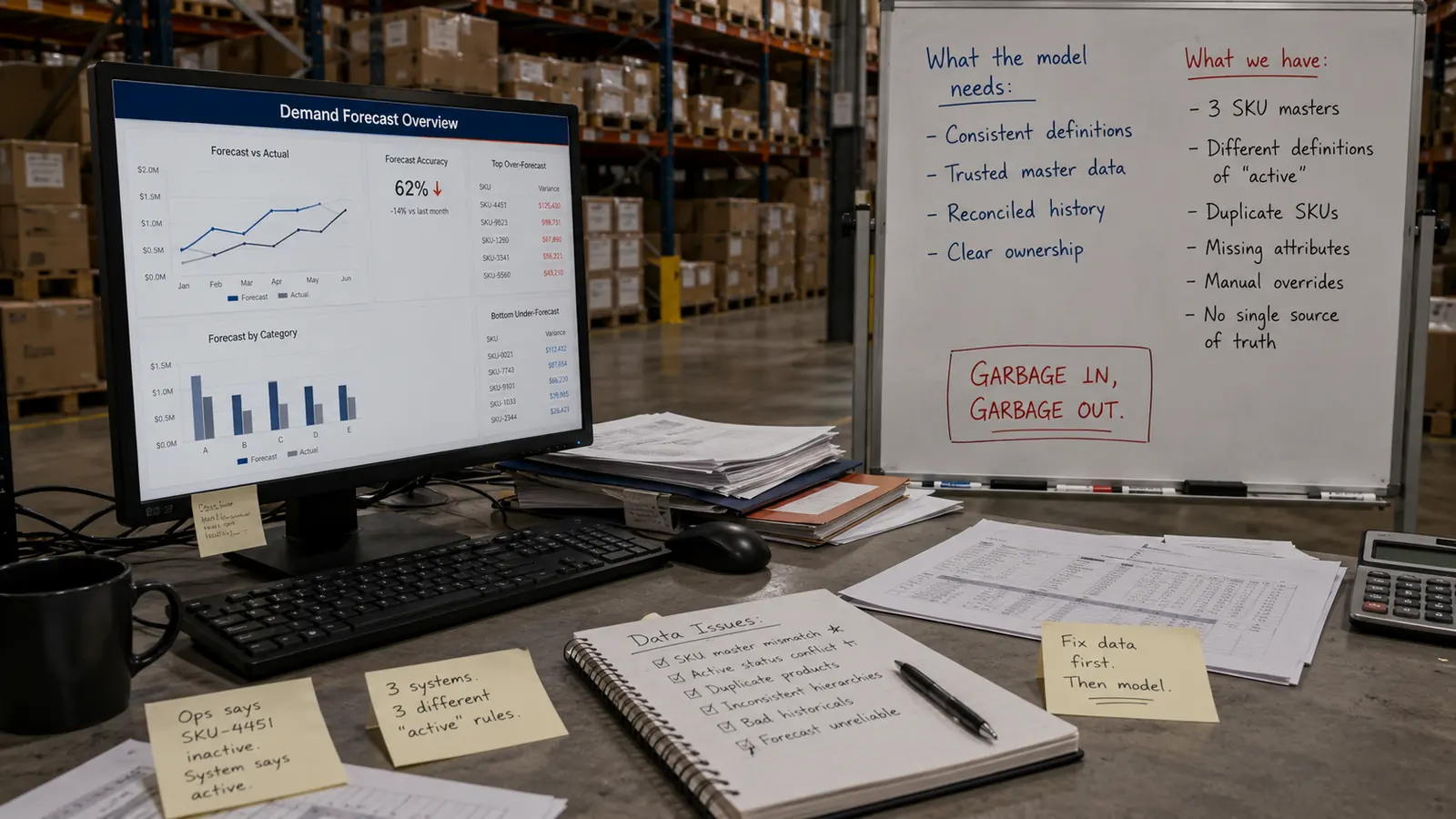 Article
Why Applied AI Fails Without Clean Data
Most failed AI deployments are not AI problems. They are data problems wearing an AI label. Here is how to tell the difference before you spend.
Read → Article
Master Data Quality: The Silent Killer of AI Projects
Item masters, customer masters, vendor masters. If they are broken, every downstream AI agent inherits the noise — and the deployment loses trust before anyone diagnoses the cause.
Read → Article
When AI Governance Is the Job, Not the Paperwork
Most mid-market AI governance is a policy document sitting in a shared drive. Real governance is the operating system that determines whether AI can safely create value inside a working business.
Read → Article
AI Doesn’t Need More Oversight. It Needs the Right Oversight in the Right Places.
AI produces mistakes. So does every other tool, process, and person in the building. The question is not how to eliminate them — it’s whether the workflow catches the ones that matter before they reach a customer, a regulator, a board, or the books.
Read →Fix the Process Before You Apply AI
Align processes to how work actually gets done. Remove workarounds, duplication, and noise. Then — and only then — apply AI. Automating a broken process scales the problem.
 Article
Your Workflows Weren’t Built for Agents
Documented workflows and actual workflows are two different things. Hand an agent the documented version and it executes the dysfunction at machine speed.
Read → Article
Workflow Optimization Needs Governance to Last
Workflow optimization creates temporary improvement unless ownership, output standards, input reliability, change control, and governance are built into the operating model.
Read → Article
Workflow Optimization Is Where AI Value Is Usually Won or Lost
AI does not fix an unclear operating model. It scales the workflow already in place. This article explains why workflow discipline is where AI value is usually won or lost.
Read → Article
Automating a Broken Process Scales the Problem
The fastest way to fail at AI is to point it at a workflow no one has audited in five years.
Read →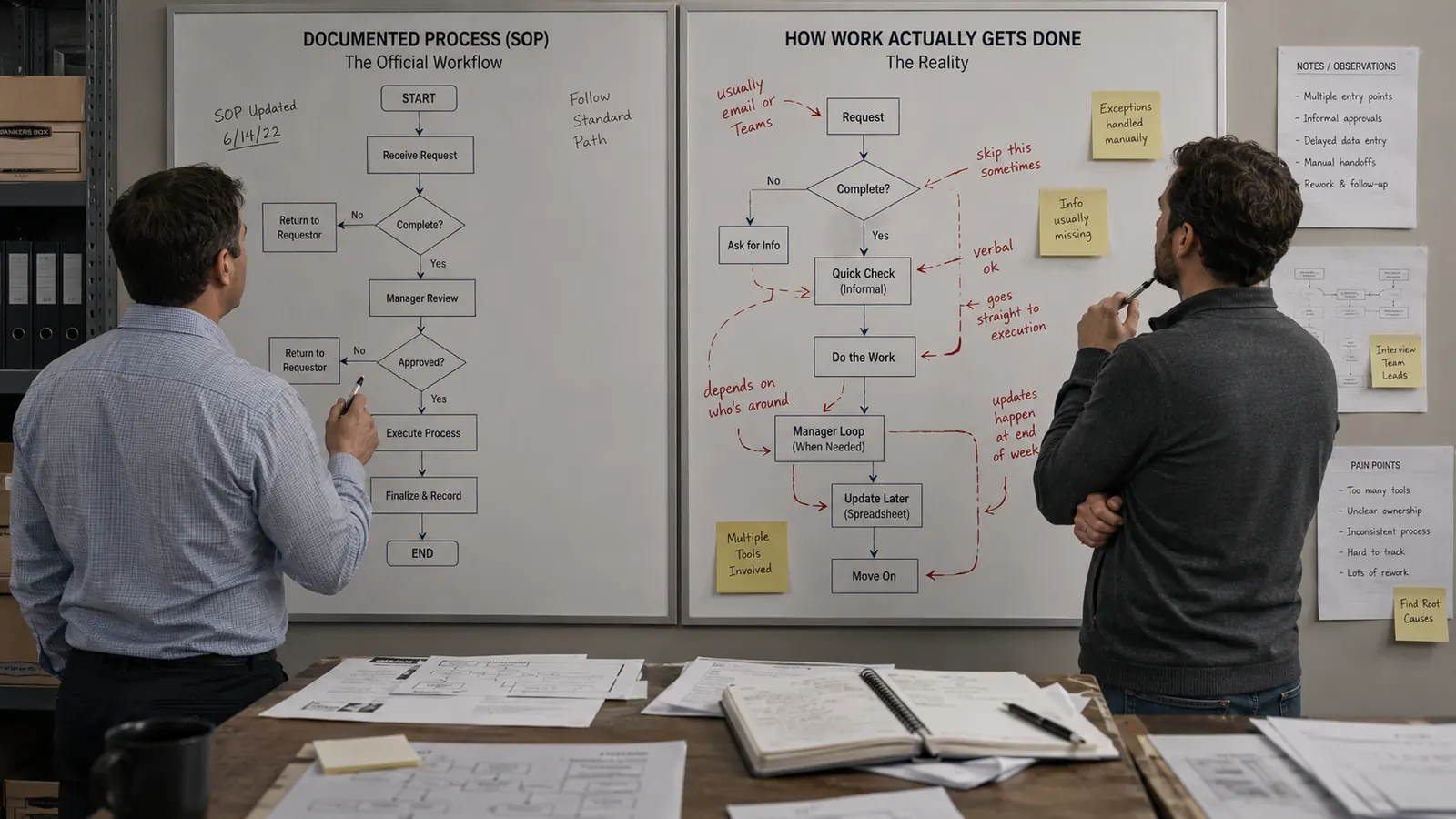 Brief
Brief
How Work Actually Gets Done vs. How It’s Documented
The gap between the SOP and the reality is where mid-market value leaks every day.
Read → Article
Designing for Human-in-the-Loop Before You Design for AI
Decision points, exceptions, and accountability lines that must exist before you write a single agent. The handoff design is not a deployment-time decision — it is the control system, and where most AI deployments quietly lose trust.
Read →Apply AI to Optimized Systems
Apply AI to optimized systems with clear ownership, controls, and measurable outcomes. No pilots without a path to production. No experiments without a defined outcome.
 Article
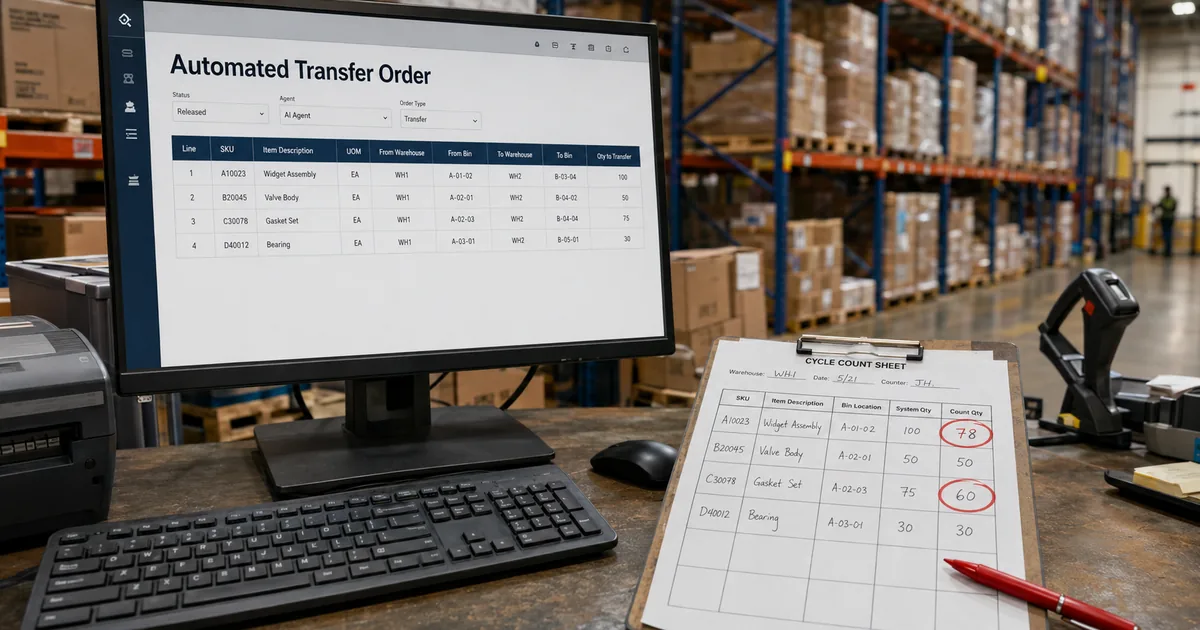
Agent Overlays Don't Skip the ERP Problem
The overlay pitch says you can skip ERP modernization. The agent still acts on the same records your people stopped trusting years ago.
Read → Article
Your Token Bill Is a Workflow Problem
When the model bill jumps, the reflex is to negotiate the contract or wait for prices to fall. The real driver is the workflow underneath: the same process running over and over. Fix the process and the spend follows.
Read → Article
Agentic AI Needs Workflows, Not Autonomy
The next phase of AI value will not come from giving agents more freedom. It will come from designing governed workflows where AI can execute work reliably.
Read → Article
The Frontier Gap: Why Some Operators Get Different Results From the Same AI Tools
Two operators deploy the same AI tool against similar use cases. One produces measured margin and cycle time gains. The other produces a decommissioned dashboard. The differential is operational, not technical — and it is widening.
Read → Article
Where Agents Earn Their Keep — and Where They Don’t
A decision framework grounded in margin, throughput, cycle time, and risk. Built for operators making capital decisions, not for teams chasing demos.
Read → Video
Video
Prompt Precision and Context Engineering for Operators
A working session on writing prompts that hold up under operational load.
Read → Article
The Mid-Market Case for Platform-Agnostic AI
Azure. OpenAI. Claude. Google. The right answer is the stack your business can run, govern, and scale — not the one a vendor is selling this quarter.
Read →Foundations: A Five-Part Field Series on Applied AI
Foundation AI Advisory’s flagship series for mid-market operators evaluating agentic AI. Five field-tested briefs covering data, process, architecture, ROI sequencing, and governance — written from inside the operating business, not the vendor stack.




Business Systems Assessment
A focused evaluation of how the business actually operates across data, workflows, and systems. Output: a prioritized execution path tied to measurable business outcomes.
90-Day AI Execution Sprint
A targeted conversation about the 90-Day AI Execution Sprint and the workflow where execution should start.
Get Foundation AI Advisory’s running record on agentic AI.
Insight assets for mid-market operators. Published when there is something worth publishing.
We do not share your information. Unsubscribe any time.